Showing posts with label companies. Show all posts

Saturday, December 10, 2011

20 fastest-growing companies in the world

Next
Although the world is going through some tough economic times, there are companies that are posting astonishing growth. Fortune magazine has just come out with a list of fastest-growing companies in the world.
Let us take a look at 20 of them. All the figures are based on three-year average.
SXC is both a pharmacy benefits manager and a service provider to PBMs.
Next
1. SXC Health Solutions
Revenue growth: 151 per cent
Profit growth: 65 per cent
Total return: 105 per cent
Revenue: $2593.9 million
Net income: $68.2 million
Industry: Health Care
SXC is both a pharmacy benefits manager and a service provider to PBMs.
With some $72 billion in branded drugs losing patent protection in the next five years, sales of generic alternatives are likely to rise.
SXC's PBM unit, which acts as middleman between the insurance company and the pharmacy, could be the beneficiary.
The company dominates the single-serve market.
Next
2. Green Mountain Coffee Roasters
Revenue growth: 63 per cent
Profit growth: 69 per cent
Total return: 120 per cent
Revenue: $1912.4 million
Net income: $113 million
Industry: Beverages
The company dominates the single-serve market and boasts customers such as ConAgra Foods, Starbucks and Dunkin' Donuts, which use K-cups for hot cocoa, teas and coffees.
It reported 51 per cent sales gains in 2010.
Next
3. Hi-Tech Pharmacal
Revenue growth: 51 per cent
Profit growth: 234 per cent
Total return: 42 per cent
Revenue: $190.9
Net income: $41.5
Industry: Health Care
This maker of generic drugs for allergies, diabetes and pain reported 51 per cent sales gains in 2010 and has continued strong this year with a 45 per cent year-over-year increase in the most recent quarter.
Baidu's profit rose 78 per cent.
Next
4. Baidu
Revenue growth: 65 per cent
Profit growth: 78 per cent
Total return: 65 per cent
Revenue: $1363.8 million
Net income: $619.7 million
Industry: Technology
Baidu holds 84 per cent of the Internet search market share (by query) in China, with its next closest competitor, Google, clutching a mere 8 per cent, according to iResearch.
It celebrated its 30-year anniversary in 2010.
Next
5. Medifast
Revenue growth: 49 per cent
Profit growth: 87 per cent
Total return: 65 per cent
Revenue: $271.3 million
Net income: $21.1 million
Industry: Beverages
The company celebrated its 30-year anniversary in 2010 by beefing up profits 73 per cent.
Revenue at its Take Shape for Life personal coaching division, which accounts for 65 per cent of Medifast's total, increased by 62 per cent.
Company's first product was a success.
Next
6. Alexion Pharmacueticals
Revenue growth: 75 per cent
Profit growth: 82 per cent
Total return: 37 per cent
Revenue: $589.5 million
Net income: $102.9 million
Industry: Health Care
The company's first product to reach the market, Soliris - which treats a rare, but life-threatening disease that basically destroys red blood cells - has been a success.
Sales rose about 50 per cent in the most recent quarter compared to the equivalent period in 2010.
Discovery's non-US advertising revenue rose 25 per cent in the second quarter.
Next
7. Discovery Communications
Revenue growth: 105 per cent
Profit growth: 79 per cent
Total return: 28 per cent
Revenue: $3855 million
Net income: $788 million
Industry: Entertainment
With programming in 38 languages, Discovery's non-US advertising revenue increased 25 per cent in the second quarter, while affiliate revenues-payments made to Discovery's networks by cable and satellite-TV providers-rose 18 per cent.
For the year, analysts expect earnings to jump 32 per cent.
Nine plants produce 740 million gallons of the fuel annually.
Next
8. Green Plains Renewable Energy
Revenue growth: 299 per cent
Profit growth: 102 per cent
Total return: 22 per cent
Revenue: $2518.7 million
Net income: $40.2 million
Industry: Energy
Green Plains Renewable Energy's first ethanol-producing plant came online in Iowa in 2007, producing 15 million gallons that year.
Now the company's nine plants produce 740 million gallons of the fuel annually, making Green Plains the fourth-largest ethanol producer in North America.
Revenues rose 22 per cent in 2010.
Next
9. Home Inns and Hotel Management
Revenue growth: 46 per cent
Profit growth: 94 per cent
Total return: 26 per cent
Revenue: $464.6 million
Net income: $51.6 million
Industry: Hotels
Tourism is blossoming in China, so it's no surprise that this Chinese budget-hotel chain has been growing, too.
Revenues for the company increased nearly 22 per cent in 2010; in its most recent quarter, that figure was 12 per cent higher than in the same quarter last year.
The firearm manufacturer delivered a bang-up second quarter.
Next
10. Sturm Ruger and Co
Revenue growth: 24 per cent
Profit growth: 848 per cent
Total return: 49 per cent
Revenue: $262.4 million
Net income: $27.9 million
Industry: Industrial
The firearm manufacturer delivered a bang-up second quarter, easily beating analysts' estimates: Sales increased 23 per cent compared to the same quarter in 2010 and profits shot up 33 per cent.
Fiscal year 2011 'was one hell of a year for Cirrus Logic'.
Next
11. Cirrus Logic
Revenue growth: 24 per cent
Profit growth: 340 per cent
Total return: 42 per cent
Revenue: $369.6 million
Net income: $203.5 million
Industry: Technology
As their annual report puts it, fiscal year 2011 (which ended March 26) "was one hell of a year for Cirrus Logic".
The maker of chips for the iPad and iPhone has been booming along with its scaldingly hot customer.
It saw profit growth of 59 per cent.
Next
12. priceline.com
Revenue growth: 28 per cent
Profit growth: 59 per cent
Total return: 64 per cent
Revenue: $3309.8 million
Net income: $578.5 million
Industry: Technology
The discount travel broker, famous for its "name your own price" deals, lately seems to able to name its own sales.
Priceline.com-beamed to the forefront of America's consciousness with travel bookings growing at warp speed: 47 per cent in 2010.
Its high-quality products have hooked the fashion-conscious.
Next
13. lululemon athletica
Revenue growth: 34 per cent
Profit growth: 47 per cent
Total return: 57 per cent
Revenue: $760.2 million
Net income: $135.6 million
Industry: Retail
Selling yoga pants at $98 a pop, workout gear retailer Lululemon might not seem like a good bet in tough times.
But its high-quality products have hooked the fashion-conscious and the fit-a crowd that still has discretionary income
Its profit rose 50 per cent.
Next
14. Concho Resources
Revenue growth: 41 per cent
Profit growth: 50 per cent
Total return: 35 per cent
Revenue: $1134.2 million
Net income: $179.4 million
Industry: Energy
When times are good in the oil industry, they're really good.
In this case, high prices have helped propel revenues at oil and natural gas company Concho Resources as its aggressive expansion increased its production to 15.6 million barrels.
MercadoLibre added 10 million registered users in 2010.
Next
15. MercadoLibre
Revenue growth: 33 per cent
Profit growth: 72 per cent
Total return: 32 per cent
Revenue: $232.2 million
Net income: $60.5 million
Industry: Electronic Auctions
The eBay of Latin America added 10 million registered users in 2010, continuing an extended period of growth in a region that is adding Internet users at a high rate.
The firm doesn't dig for its own metals.
Next
16. Silver Wheaton
Revenue growth: 39 per cent
Profit growth: 51 per cent
Total return: 31 per cent
Revenue: $495.6 million
Net income: $367.7 million
Industry: Mining
Silver Wheaton seems to have found a profit-generating strategy that's solid gold.
The precious metals company's business model has enabled it to reap the benefits of high silver prices, while keeping its costs under control.
The firm doesn't dig for its own metals. Instead, it pays mines an upfront fee in exchange for the right to purchase, at a fixed price, the silver they produce.
It manages roughly $13 billion.
Next
17. Ares Capital
Revenue growth: 32 per cent
Profit growth: 68 per cent
Total return: 35 per cent
Revenue: $552.6 million
Net income: $739.2 million
Industry: Financial Services
Managing roughly $13 billion as of June 30, Ares Capital has carved out a niche as a specialty financial company for so-called middle market companies - working with integrated debt and equity financing.
Its portfolio was boosted in 2010 in a merger with Allied Capital.
Trina Solar has increased its profits nearly 20-fold.
Next
18. Trina Solar
Revenue growth: 66 per cent
Profit growth: 68 per cent
Total return: 14 per cent
Revenue: $2071.7 million
Net income: $314.6 million
Industry: Energy
Despite a bumpy 2011, Trina Solar has increased its profits nearly 20-fold to $584 million in 2010.
The Chinese solar company has made a name for itself with low-cost technology and global reach.
It has grown at a breakneck pace in recent years.
Next
19. Ebix
Revenue growth: 42 per cent
Profit growth: 48 per cent
Total return: 30 per cent
Revenue: $140.6 million
Net income: $61.8 million
Industry: Technology
The software and e-commerce provider to the insurance industry runs online exchanges and performs information technology consulting for more than 100 companies.
It has grown at a breakneck pace in recent years, landing near the top of Fortune's list of fastest growing companies in 2009 and 2010.
Its profit rose 39 per cent.
More
20. KapStone Paper and Packaging
Revenue growth: 44 per cent
Profit growth: 39 per cent
Total return: 35 per cent
Revenue: $812.9 million
Net income: $73.8 million
Industry: Industrial
With end products including pet food bags, beer cartons, and grocery bags, KapStone Paper and Packaging supplies the material for every paper product you can think of-and some you probably can't such as floors and even laminated house siding.

10 popular company logos and their history


Apple logos.
Next
A logo is of great importance for any company. It stands for a company's business purpose and is crucial for communicating with the target audience.
Many corporate brands change their logos with time to keep pace with their changing business.
Here we present the evolution of logos of 10 companies.
1. Apple
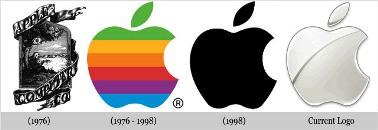
Steve Jobs, Steve Wozniak, and Ronald Wayne had together setup Apple in 1976, to sell their hand-built computer Apple I.
When Apple was started, the logo was a complicated picture of Isaac Newton sitting under a tree. This had been designed by Jobs and Wayne, with the inscription: 'Newton . . . A Mind Forever Voyaging Through Strange Seas of Thought . . . Alone.'
However, Jobs hired Rob Janoff to simplify the logo.
Janoff created the 'Rainbow Apple' which was the logo for company till 1998.
When Apple launched the new iMac in 1998, they changed their logo to a monochromatic apple logo.
Now, the Apple logo comes with gradient chrome silver design.
Shell logos.
Next
2. Shell
In 1900, when the company was started, the logo was a realistic and simple shell which lies flat on the ground.
This was a pectin or scallop shell, but today the company has a logo which is bold, colourful and much simpler.
The evolution of the logo began after 1915.
When the company started a project in California, it added the red and yellow colors to the symbol.
These are the colours of Spain, where many Californian settlers were born.
Xerox logos.
Next
3. Xerox
The Xerox Company used to be known as the Haloid Company almost 100 years ago.
But in 1938, Chester Carlson invented xerography.
Haloid Company decided to go with Chester and made the first photocopying machine named Haloid Xerox 14.
The original Haloid word which was prominent in the company's logo before 1961 was completely replaced by Xerox.
They retained almost the same logo from 1961 to 2004.
The company changed its logo in 2008 to get away from this stereotyped image, by changing the font of the word.
They also added a ball which has a stylish X.
Microsoft logos.
Next
4. Microsoft
The Microsoft story began in 1975, when Bill Gates and his friend Paul Allen coded the first computer language for a PC and named it BASIC.
Soon they named their partnership as Micro-Soft which explains the first logo of the company.
They changed the logo in that year itself and dropped the hyphen too.
For the next 12 years, the logo had a distinctive O.
A new logo came on in 1987.
The new logo designed by Scott Baker, came to be known as 'the Pacman logo' because of the distinctive cut in the O.
In 1994, they integrated their tagline 'Where do you want to go today?' within the logo. This was not well accepted and the company kept trying different taglines.
The new 2008 logo has all the text in Italics (including the tagline), but the look of the logo has remained pretty much the same.
Nike logos,
Next
5. Nike
Caroline Davidson designed the Nike logo for just $35 in 1971.
The main part of the logo hasn't changed with time.
As the brand gained recognition, the company name was dropped from the logo.
The company has different variations of this logo for its various departments.
Wal-Mart logos.
Next
6. Wal-Mart
The company has tried out various colours and variation of the word Walmart over the years.
In 1962, when Sam Walton started, the company logo had simply the word spelled in a very basic design.
The logo was changed in 1964, when a hyphen was added and the color was also changed from blue to black.
The 1968 logo shown here is the discount city logo, which was mainly used for uniforms, in-store signing etc, but it was never used to advertise or even in annual reports.
The 1981 logo changed the curly font to a more solid font, giving the company a more stable, established and balanced look.
The hyphen in this logo was replaced by the star in 1992, and the familiar blue colour of the logo returned for the first time after the company's inception.
The font of the current logo differs a little from the original and is indeed more stylish, but the 'Walmart' word without a break appears for the first time after 1962.
They have kept the star from 1992, but moved it to the end.
Pepsi logos. 
Next
7. Pepsi
Pepsi was first started by Caleb Bradham in 1890s.
Initially named as Brad's drink the name was quickly changed to Pepsi-Cola, which is visible in the first 1898 logo.
Finally in 1903, the name was trademarked and hasn't been changed till date.
In the early years, Brad made custom logos for the brand as it became more famous.
In 1933, the company was bought by Loft, Inc.
The company changed the bottle size from 6 to 12 oz. and came up with the 'Refreshing and Healthful' logo.
However, the major breakthrough in the Pepsi logo design came in 1940's.
Walter Mack, then CEO of Pepsi, came up with the idea of a new bottle design, with a crown having the Pepsi logo.
The 'Pepsi Globe' emerged when USA was in WWII, and to support the country's war efforts, Pepsi had a blue, red and white logo.
During the 1960s, the script was changed from the curly red, and the main attraction was on the bottle cap in the logo.
We see the first appearance of the Pepsi Globe instead of the bottle cap in 1973.
In 1991, the typeface was moved from inside the globe.
The red bar was lengthened and the typeface came on the top of the globe. In 1998, the white background in the logo was replaced by the blue colour, which also resulted in dropping the red horizontal band.
The globe now had 3D graphic and larger than earlier versions. It might be that since, Pepsi and the globe touch each other for the first time in the logo, the name 'the Pepsi Globe' was given to the logo.
The globe came on top of the script in 2003, and in their current logo they have done away with the script altogether.
Google logos.
Next
8. Google
The clarity of thought is visible in the company's logo right from the very beginning, when in 1996 two Stanford University computer science graduates -- Larry Page and Sergey Brin -- built the search engine.
The name of the search engine is derived from Googol (meaning one followed by 100 zeros).
Google's first logo was created by Brin, after he taught himself to use the free graphic software GIMP.
Later, an exclamation mark mimicking the Yahoo! logo was added.
In 1999, Stanford's Consultant Art Professor Ruth Kedar designed the Google logo that the company uses today.
IBM logos.
Next
9. IBM
IBM was earlier known as The International Time Recording Company (ITR), whose major products were mechanical time recorders, invented and patented by Willard L. Bundy in 1888.
The old logo of the company had ITR inscribed on it.
In 1911, ITR was merged with the Computing-Tabulating-Recording Company, which is why the logo had both ITR and CTR.
In 1924, the Computing-Tabulating-Recording Company adapted the name International Business Machines Corporation.
The ornate letters that formed the 'CTR' logo were replaced by the words 'Business Machines' girdled by the word 'International.'
In 1947, IBM decided to drop the globe from its logo, which was by then quite familiar among the people.
The logo was not the only change in 1947; it was accompanied by a change in business from the punched-card tabulating business to computers.
The typeface of this logo was called Beton Bold.
In 1956, before Thomas J Watson, Senior died he appointed Tom Watson, Jr. as the CEO. Tom Watson, Junior decided to project the beginning of a new era in the company, for that he changed the company's logo as well as the actions.
Paul Rand designed the new logo which represented that the changes in the company would be subtle and will not disrupt the continuity.
Also, the new logo looked more solid, grounded and balanced.
Another change in the logo was designed by Paul Rand which had stripes instead of the solid font. It depicted 'speed and dynamism'.
Since, then the logo has more or less remained the same, and the design has been recognized and replicated all over the world.
Kodak logos.
10. Kodak
Kodak was the first company to integrate its name and looks into one symbol in 1907. After 1935, Kodak predominantly used yellow and red colors and the complete name of the company.
First time the Kodak name was completely written in the logo in 1935, which began the use of yellow and red colors as well.
In 1960, they tried to show a flip page as a logo, but was changed to a box and graphic 'K' element in 1971.
Again, like other companies, Kodak decided to simplify their logo in 1996, and removed the boxes.